
Two Helicopters, Two Operating Systems
Rescue and Medevac Helicopters Perform Different Missions

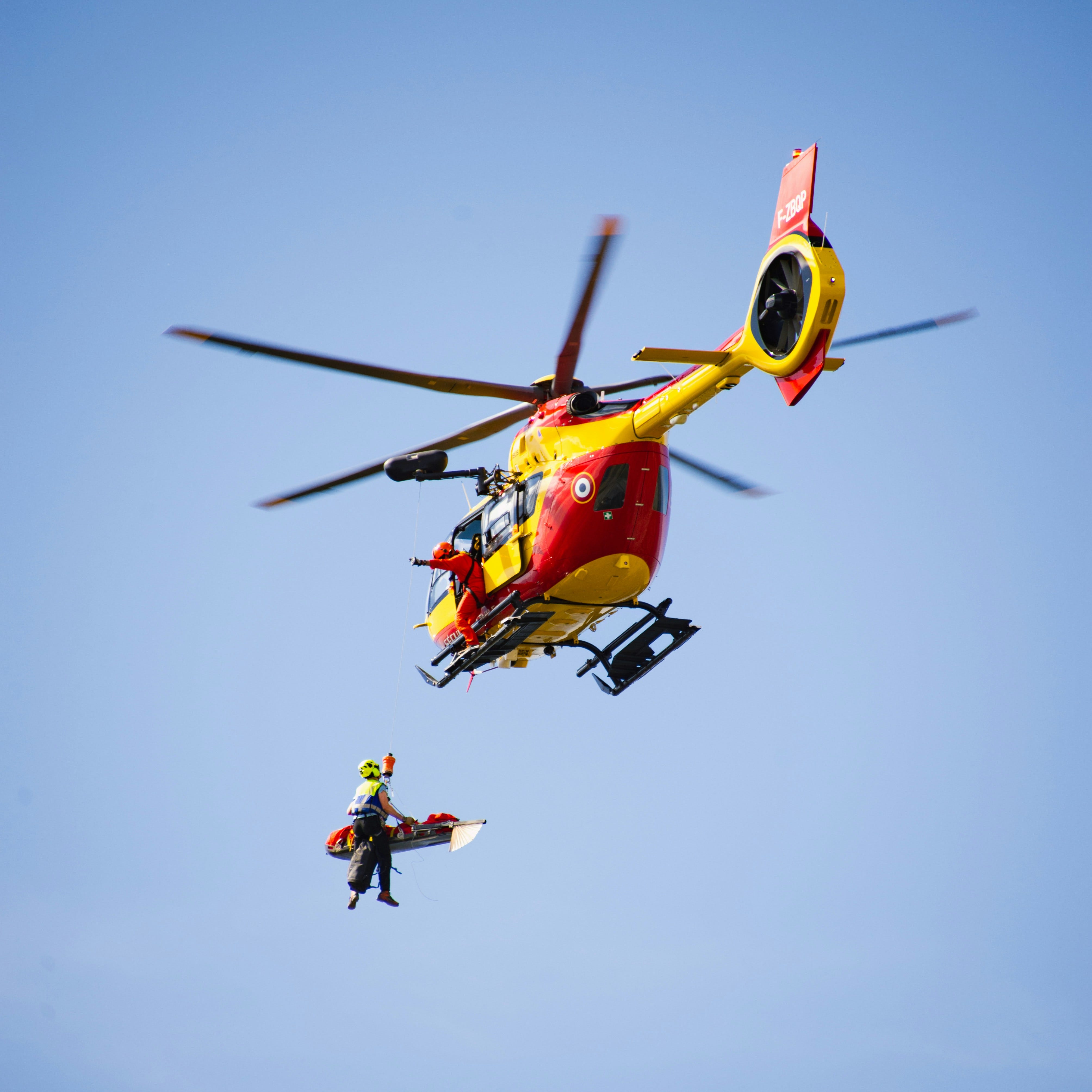
Photo by Dion for Unsplash
When a Tesla carrying two adults and two children plunged more than 250 feet off Devils Slide near Pacifica on January 2, 2023, the rescue attracted national attention. Images of the mangled vehicle resting near the base of the cliff seemed to leave little hope for survival.
But the story that interested me was not the crash itself.
It was the helicopters.
Most people assume that emergency helicopters perform the same function. They don’t.
The Devils Slide rescue required two different helicopters operating under two different systems. One helicopter was designed to reach the victims. The other was designed to care for them.
The California Highway Patrol was responsible for the rescue operation and dispatched CHP Air Operations helicopter H-30. Its mission was not medical transport. Its job was extraction.
The CHP crew lowered rescue personnel to the crash site, secured the victims, and hoisted them from the cliff. Only after the family had been brought to safety were they transferred to a Stanford Life Flight helicopter for transport to definitive medical care.
The distinction may seem minor. It isn’t.
Rescue helicopters and medevac helicopters are designed to solve different problems.
A rescue helicopter is built around access. It may be called to a mountainside, a remote wilderness area, the ocean, or a cliff hundreds of feet above the water. The crew’s challenge is reaching people who cannot be reached by conventional means.
A medical helicopter is built around patient care. Once a patient is aboard, the focus shifts to monitoring vital signs, managing airways, administering medications, and transporting the patient to the most appropriate trauma center.
The Devils Slide rescue provides an opportunity to examine how emergency medicine works in real time.
Who decides whether a helicopter is needed?
What makes a patient a candidate for air transport rather than ground transport?
How do emergency responders evaluate the severity of injuries when the full extent of those injuries may not yet be known?
What role do terrain, distance, weather, and hospital capability play in the decision?
And how do flight crews balance the risks of flying against the benefits of rapid transport?
These decisions are made every day by EMS personnel, trauma surgeons, dispatchers, pilots, flight nurses, and paramedics.
The process is far more complex than simply calling for a helicopter.
In some situations, a helicopter is requested because terrain prevents access by ambulance. In others, the patient’s injuries require immediate transport to a specialized trauma center. Sometimes the decision is driven by time. Sometimes it is driven by geography. Often it is a combination of factors.
Cost and insurance issues also enter the discussion, although usually not during the initial emergency response. In the field, the focus is on stabilizing the patient and getting him or her to the appropriate level of care.
The public sees a helicopter landing on a highway or lifting off from a hospital rooftop.
What they do not see are the decisions taking place behind the scenes.
The Devils Slide rescue reminds us that emergency aviation is not one system. It is a network of specialized aircraft, medical professionals, pilots, dispatchers, and rescue personnel working together to solve different problems under extraordinary circumstances.
One helicopter rescued the family.
The other helped ensure they received the medical care they needed.
Both were essential.
Who knew? Thanks for taking the time to check this out. We are surrounded by the best medical help there is to offer, and are privileged to have it close at hand. But I had no idea of this complexity. Thanks.
Interesting, Geri. What prompted you to look into this? Do you hear the helicopters approaching the Stanford hospital? I remember hearing them often when I worked on campus.